On view at Boston’s Metropolitan Waterworks Museum, May 13, 2023 – November 18, 2023

Curated by Arlinda Shtuni, Reservoir: What the Water Knows prompts us to consider our complicated relationship with water and reminds us of our interdependence with nature. The exhibition presents new and freshly rendered works by six noted local artists who consider these processes as the global temperatures rise and as the demand for water intensifies and inquire. Participating Artists include A+J Art+Design, Caitlin & Misha, Heather Kapplow, Nathaniel Price, Nancy Selvage, and Ros Zimmermann. The exhibition will also showcase a site-specific installation of soundscapes and sound acousmatic works by a group of Northeastern University music students guided by Pr. Hubert Ho.

Ann Hirsch and Jeremy Angier’s “You Are Here 2” picks up where our earlier You Are Here leaves off, further exploring interactions between land and water, substance and light, physical object and digital image. A five-minute multimedia odyssey transforms your sense of place with a sequence of nine varied waterscapes projected across topography of the Chestnut Hill Reservoir area.

“The Speaker’s Stand,” by Ann Hirsch and Jeremy Angier of A+J Art+Design, pays homage to abolitionist and suffragist Abby Kelley Foster …The sculpture was installed in November 2021, with a dedication held Dec. 2, 2021.”

Caitlin and Mishas’s “Confluere is site-specific, and a strong sense of place anchors most of the other works on view, too. That’s immediately clear in the case of You Are Here by A+J Art+Design, the moniker of artists Ann Hirsch and Jeremy Angier. Created with digital and analog animation techniques, their six-minute video projects fourteen waterscapes across the topography of Somerville. Watching waves roll across the city is unsettling in a time of climate crisis, but the work also offers plenty of wit and whimsy: At one point, the blue circle representing the location of the Somerville Museum becomes a bathtub drain as everything in the surrounding map—the Mystic and Charles Rivers, the familiar squares of Camberville—starts to swirl.”

Grateful to have chatted with Helen Russell (not related) during the research phase for this two-part Netflix documentary by Director Sam Pollard!

“Director Sam Pollard strikes a masterful balance between the athlete and activist sides of Russell, who passed away last July at age 88. The two-part Bill Russell: Legend, released by Netflix on February 8th, clocks in at 3 hours 29 minutes. It chronologically documents Russell’s career and uses it to contextualize the major events of the civil rights movement.” (from Celtics Blog Review)

“The scene “triggers an instinct of solidarity [that] that person needs help,” said curator Julia Csekö, a School of the Museum of Fine Arts at Tufts University alum.”

“In 2018, Canada resettled more refugees than any other country, taking in 28,100. Despite seeing orange flotation devices and capsized boats in the newspaper and on TV, this installation brought you face-to-face with the harsh realities of displacement. Roughly 1 in 49 refugees will die on their journey across the Mediterranean sea, an indication of risk people are willing to take to escape persecution, conflict, violence, or humans rights violations.”

“He was a little bit reluctant about having a sculpture of himself put on City Hall Plaza,” Hirsch said. “It wasn’t something that he was very interested in seeing, and that was consistent with the man that he was.”

Russell agreed to the project so long as it promoted and raised money for mentorship programs. So Hirsch went to Seattle to have lunch with Russell and his daughter, attorney Karen Russell. She ended up speaking with him for nine hours…”

““This is an art process that’s over 300 years old; it’s known as the lost wax process,” says Gates. “Picture a very large solid tube of hard wax. The artist basically chisels out the art piece from the wax. All the images and the delineations you see are in that wax…when the artist has completed their work — that essentially comes in with a molten metal they spray over the wax…Before the wax can start melting and destroying the art piece, the molten metal is immediately cooled off with a misty spray of cold water. That’s a very old process and it’s still used today.”

(CLOSE but, not quite…..lol)

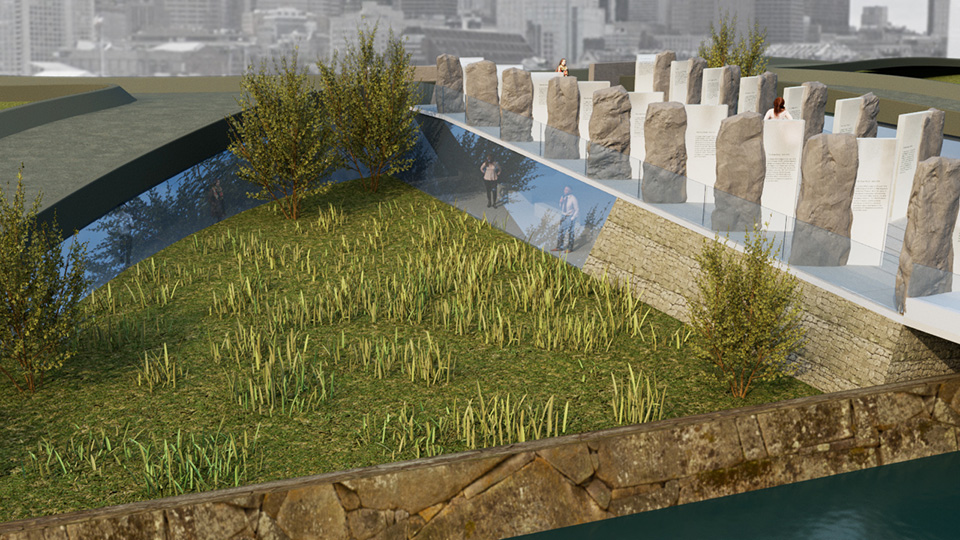
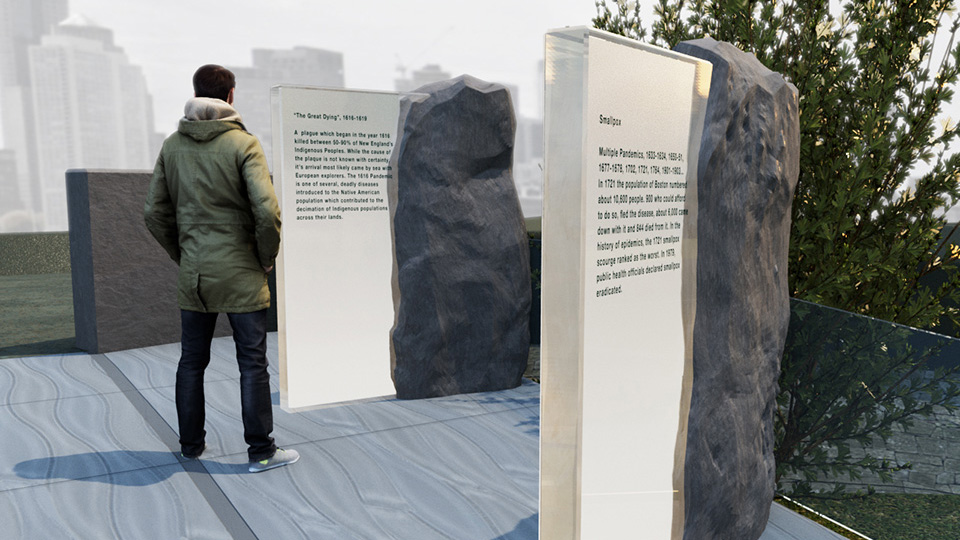
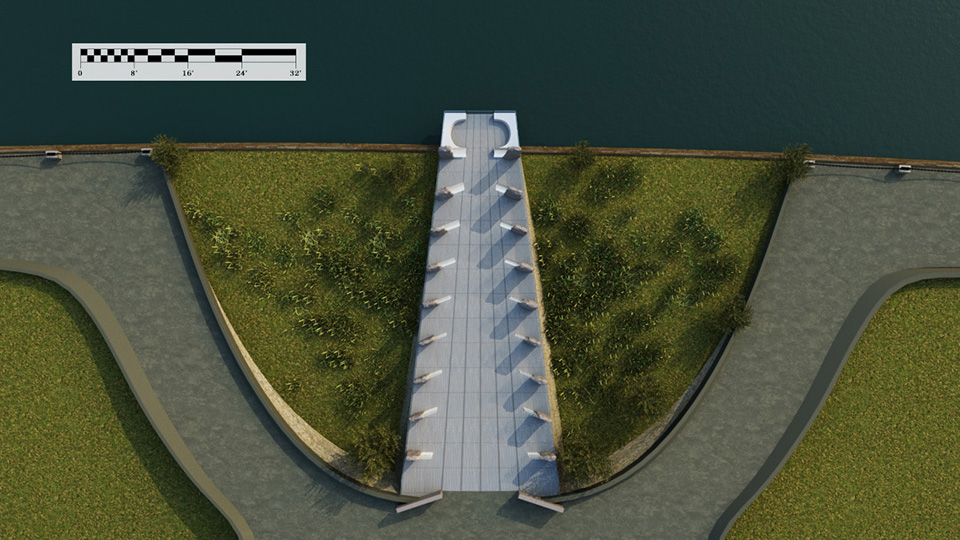
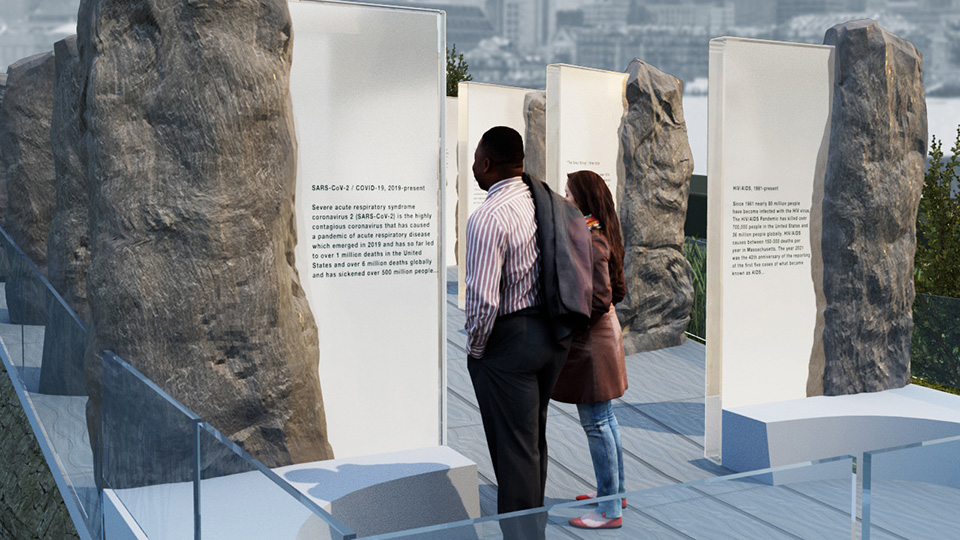
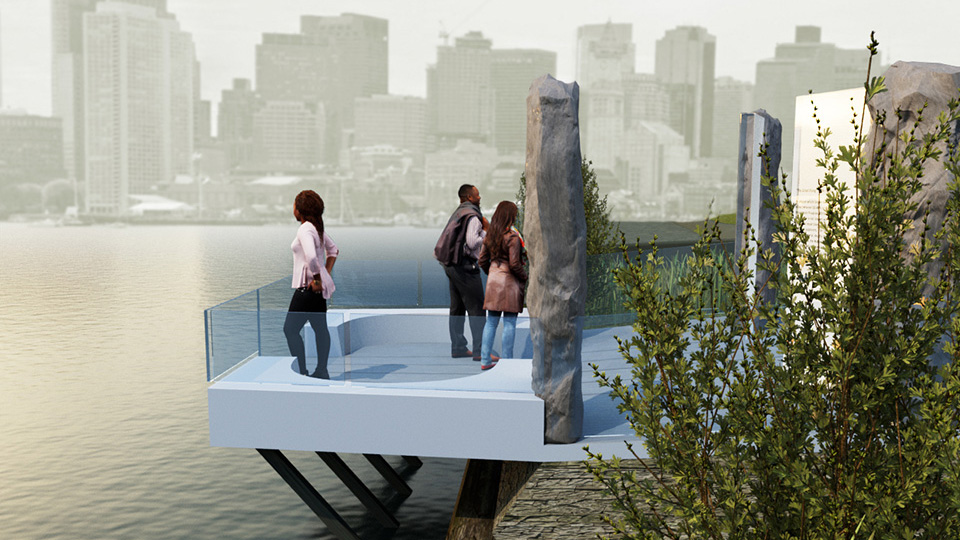
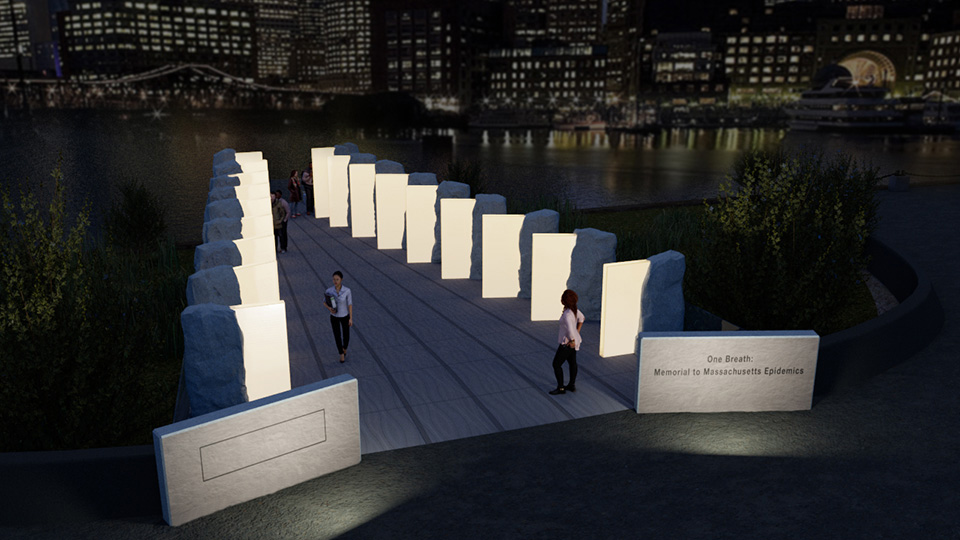
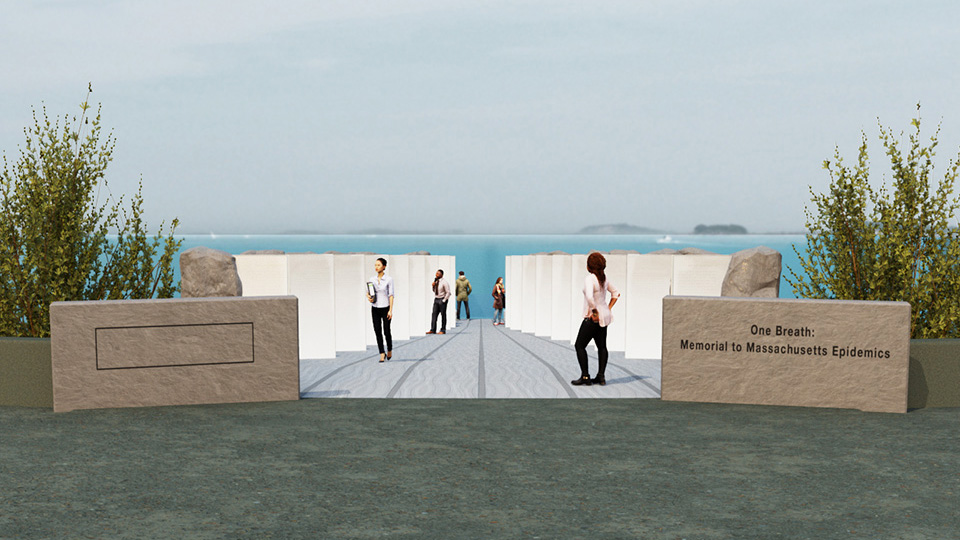
In The Boston Globe Opinion Section today, One Breath: Memorial to Massachusetts Epidemics proposal.

Thank you @GlobeOpinion and Marjorie Pritchard for inviting us to participate in this conversation.

See our vision for how Boston should memorialize the nearly 1 million COVID-related deaths in the US and give feedback on the nine proposals.

“‘27 migrants dead in the channel’. That’s the headline that has been dominating our news cycle and social media for weeks. The seemingly pressing need to define the people involved as ‘migrants’, a word that has become so tangled up with hostility and xenophobia, is indicative of the dire state of our current linguistic register when discussing these tragic events and the succeeding political implications.”